
The short answer is: it depends. Non-surgical spinal decompression may be a reasonable option for some people with bulging or herniated discs, but not everyone. Whether it makes sense for you comes down to your specific symptoms, what an examination shows, your health history, and what is actually driving your pain.
What Is a Bulging Disc?
Your spinal discs sit between each vertebra and act as shock absorbers. Each disc has a tough outer shell and a softer, gel-like center. When the outer fibers weaken or experience repeated stress, the inner material can push outward beyond the disc's normal boundary. If that bulge contacts a nearby nerve root, you can get pain, burning, tingling, numbness, or weakness traveling into the buttock or down the leg.
The MRI Finding Is Not the Whole Story
Disc bulges are common in people who have zero pain. Research has consistently shown that a meaningful percentage of pain-free adults have disc bulges or herniations on MRI. The imaging finding alone does not explain your symptoms. Good evaluation looks at both what the imaging shows and whether it actually matches what you are experiencing.
Common Symptoms of a Disc Problem
- Low-back pain, constant or intermittent
- Pain into the buttock or down the leg (sciatica)
- Burning or tingling in the leg or foot
- Numbness in the thigh, calf, or foot
- Leg weakness or fatigue
- Pain that worsens with prolonged sitting, bending, or lifting
These are the kinds of symptoms that bring people in looking for sciatica treatment and non-surgical back pain care in Lincoln.
How Non-Surgical Spinal Decompression Works
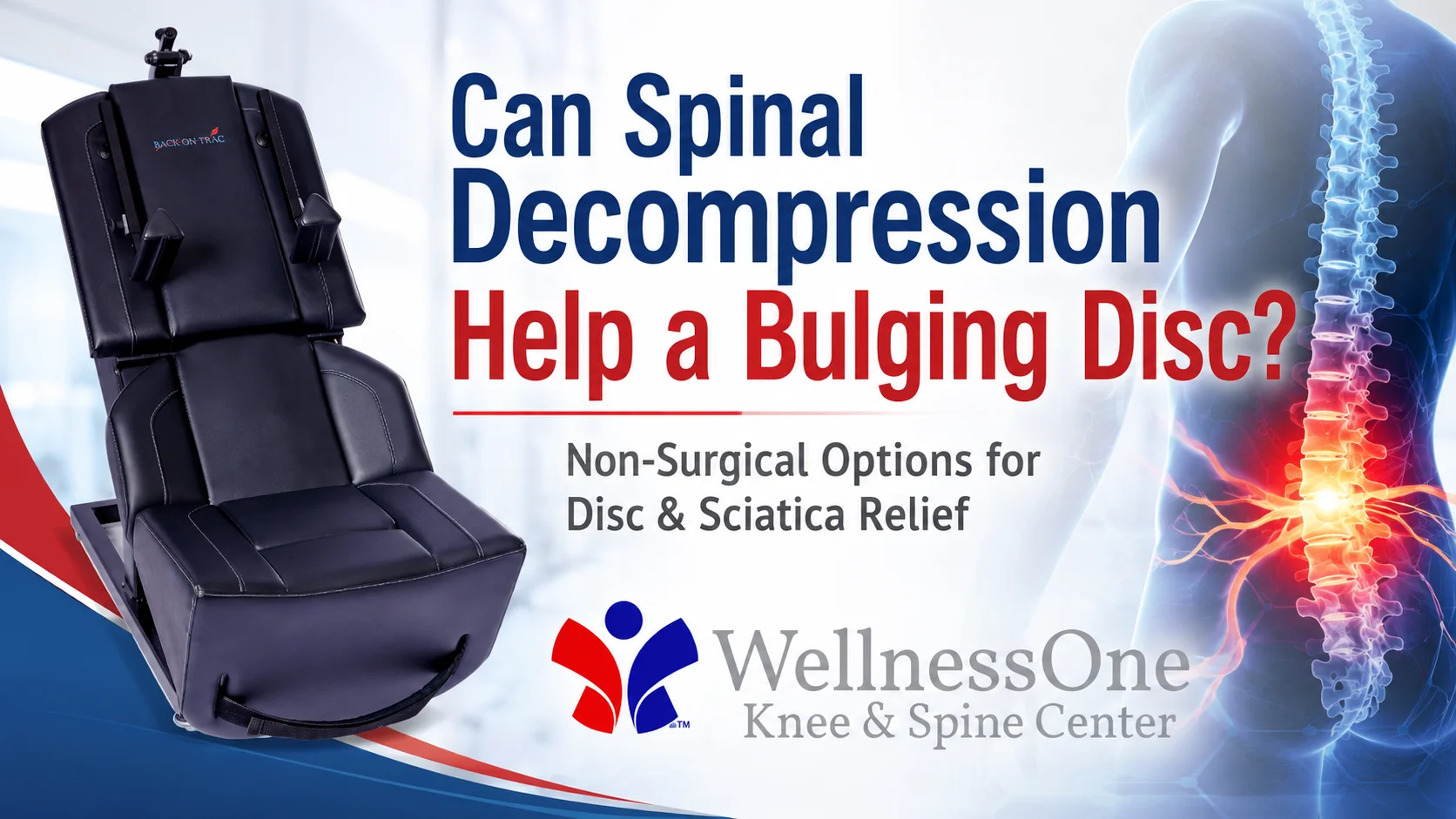
Spinal decompression uses a computer-controlled table to apply gentle, controlled distracting forces to specific spinal segments. The treatment cycles through periods of gentle pull and relaxation, targeting the affected disc level at precise angles and force settings. The goal is to reduce pressure within the disc space, create a more favorable environment around the irritated nerve, and encourage fluid and nutrient exchange through the disc.
This differs from old-style traction, which applied a sustained, single-axis pull. Modern decompression tables cycle through pull-and-release phases and can be angled to target specific levels. Settings are individualized based on your condition, tolerance, and how you respond over time.
Who May Be a Candidate?
Patients who may benefit often present with symptoms related to bulging discs, herniated discs, degenerative disc changes, or disc-related sciatica. Candidacy is never determined by diagnosis alone. An examination is required. Someone with a herniated disc who is a good candidate looks very different from someone with the same finding who is not.
Who May Not Be a Candidate?
Conditions that may require a different approach or medical evaluation first include spinal fractures or instability, severe osteoporosis, spinal tumors, prior fusion at the affected level, certain implants, active pregnancy, significant neurological deficits, or cauda equina syndrome. Being upfront about who is not a good candidate is part of practicing responsibly.
What a Proper Evaluation Includes
At WellnessOne, evaluation for a disc-related complaint includes a detailed health history, orthopedic and neurological testing, range-of-motion assessment, and imaging review when appropriate. This is what allows us to recommend care that is matched to your condition rather than a generic protocol.
What Treatment May Involve Beyond Decompression
Spinal decompression is often one component of a broader plan. Depending on your findings, recommendations may also include chiropractic adjustments, Class IV laser therapy, electroanalgesia for pain management, and movement or rehabilitation guidance. Recommendations are individualized: what works for one person's disc problem may not be the right combination for another.
Can the Disc Heal?
The honest answer is nuanced. Discs have limited healing capacity. We are not aiming to regenerate a disc back to its original state. What we can reasonably aim for is reducing nerve irritation, improving the disc's mechanical environment, and helping your body manage the condition more effectively. For many patients, that translates into meaningful pain reduction and a return to activities that have been off the table, whether that means sleeping through the night, getting through a workday, or getting back on the golf course.
Why Previous Treatment May Not Have Worked
Many patients who come in have already tried something: medication, physical therapy, or a few chiropractic visits. Persistent symptoms are a signal worth taking seriously. They often mean the underlying mechanical issue has not been adequately addressed, not that nothing can help. It is worth reevaluating the root cause before assuming you have exhausted your options.
Frequently Asked Questions
Does spinal decompression hurt?
Most patients find the treatment comfortable. The pulling sensation is gentle and controlled. Some people even fall asleep during sessions. Mild soreness afterward is possible, similar to what you might feel after a workout, but sharp pain during treatment is not expected and should be reported immediately.
Is spinal decompression the same as traction?
They are related but not identical. Traditional traction applies a steady, sustained pull. Modern spinal decompression uses a computer-controlled table that cycles through periods of gentle distraction and relaxation at precise angles and force levels. That cycling action is what creates the negative pressure effect within the disc.
Can decompression make a bulging disc worse?
In appropriately selected patients, that risk is low. This is one reason a thorough examination matters before starting treatment. Certain conditions are not appropriate for decompression, and skipping the evaluation step is where problems can arise.
How do I know if my pain is actually coming from a disc?
That is genuinely one of the most important questions. An MRI finding alone does not answer it. An examination that looks at your symptoms, how they behave, and how your neurological and orthopedic tests respond tells us much more than the imaging report by itself.
Can a bulging disc cause sciatica?
Yes. When a disc bulges in the direction of a nerve root, it can create pressure or irritation that produces pain, burning, tingling, or numbness traveling down the leg. This is one of the more common presentations we see.
Do I need an MRI before spinal decompression?
Not always, but imaging is often helpful and sometimes necessary. If you have previous MRI or X-ray results, bring them in. We will review them as part of your evaluation. If imaging is clinically indicated and you do not have recent studies, we can discuss next steps.
Can I avoid surgery with a bulging disc?
Many people with bulging or herniated discs do not end up needing surgery. Non-surgical options including spinal decompression, chiropractic care, and laser therapy help many patients return to normal activities. That said, surgery is sometimes the right answer, and we will be straightforward with you if we believe that is the case.
How many spinal decompression treatments might someone need?
Treatment plans vary. A typical course ranges from around 12 to 36 sessions, often delivered several times per week initially. The right number depends on how long you have had symptoms, how severe they are, how your body responds early on, and other factors. We reassess regularly rather than locking you into a fixed number upfront.