
Sciatica Treatment in Lincoln, NE
That burning, shooting pain down your leg has a name, and there are non-surgical options worth knowing about. Here is what we look for and how we approach it.
What Is Sciatica?
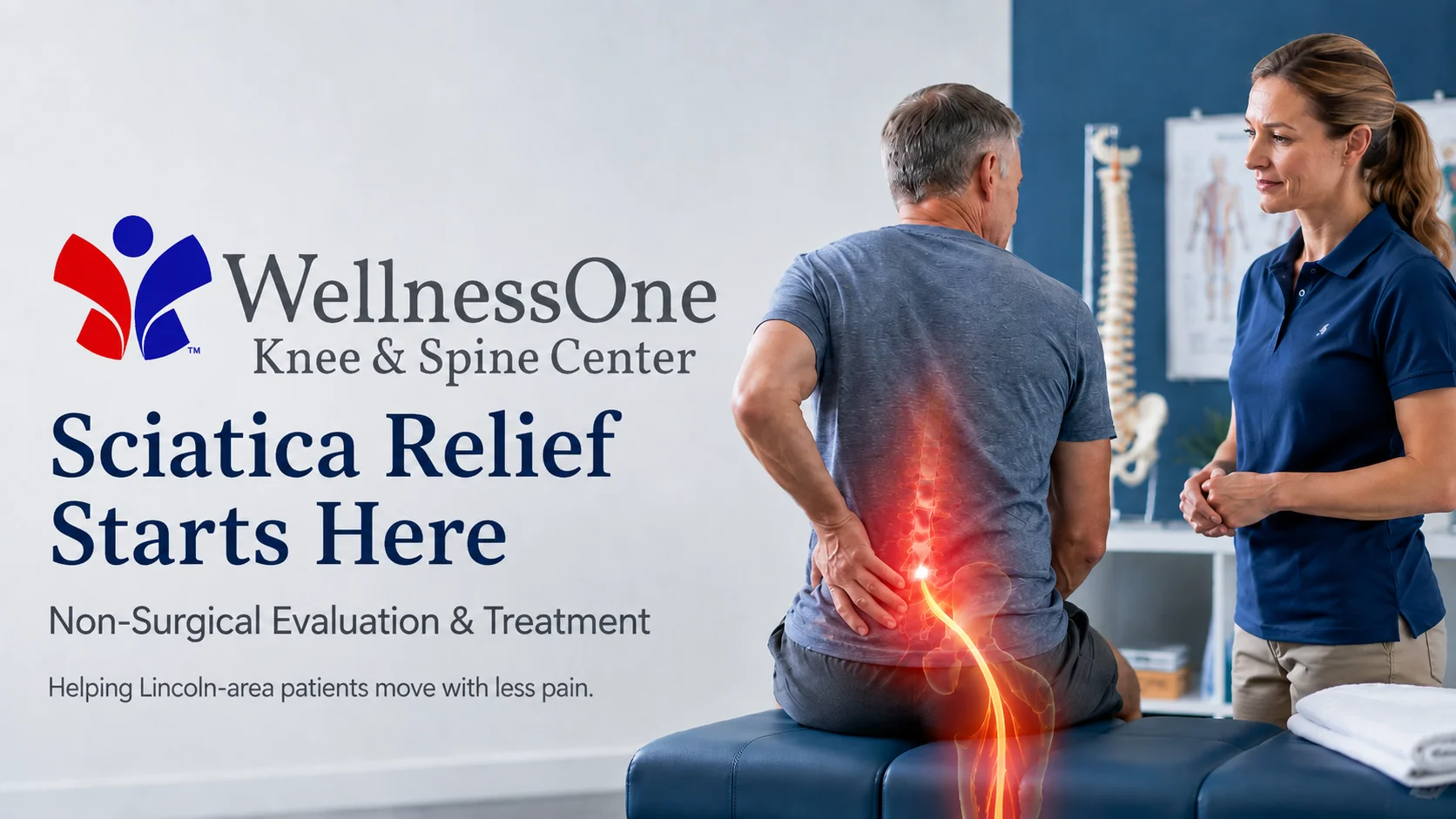
The sciatic nerve is the longest nerve in the body. It starts in the lower back, passes through the buttock, and runs all the way down the back of each leg to the foot. When something presses on or irritates that nerve, you can feel it anywhere along its path.
Sciatica is not a diagnosis on its own so much as a description of symptoms. The real question is why the nerve is being bothered in the first place. For some people it is a disc problem. For others it may be spinal joint changes, muscle tension deep in the buttock, or a combination of things. Getting that part right is what shapes the treatment plan.
Common symptoms include:
- Sharp, shooting, or burning pain that travels from the low back into the buttock and down one leg
- Tingling or a pins-and-needles sensation in the leg, calf, or foot
- Numbness in the leg or foot
- Weakness in the leg or difficulty moving the foot
- Pain that gets worse with sitting, bending, or certain movements and sometimes eases with walking
Symptoms can range from a mild, occasional ache to a constant, severe pain that makes it hard to get through the day. Either way, it is worth having it properly evaluated rather than waiting and hoping it passes on its own.
Common Causes
There are several reasons the sciatic nerve can become compressed or irritated. The most common ones we see at WellnessOne include:
Bulging or Herniated Disc
The discs between your vertebrae act as cushions. When the outer layer weakens or tears, the soft inner material can push outward and press directly on the nerve roots that form the sciatic nerve. This is one of the most frequent causes of true sciatica.
Disc Degeneration
As discs lose height over time, the spacing between vertebrae narrows. That can put more pressure on nearby nerves and joints. It tends to develop gradually, which is why many people are surprised to learn how much change has already occurred.
Spinal Joint Problems
Irritation or dysfunction in the facet joints of the lower lumbar spine can contribute to nerve pain. Changes in how those joints move can alter the mechanics of the spine in ways that affect the surrounding nerves.
Piriformis Syndrome
The piriformis muscle sits deep in the buttock, and in some people the sciatic nerve passes right through or beneath it. When that muscle tightens or spasms, it can compress the nerve and produce symptoms that look a lot like disc-related sciatica.
Spinal Stenosis
Stenosis means narrowing, and when the spinal canal or the small openings where nerve roots exit the spine narrow over time, that reduced space can irritate the sciatic nerve. It is more common in people over 50.
Postural and Movement Patterns
Long periods of sitting, certain occupational demands, and muscle imbalances around the pelvis and hips can all contribute to sciatic nerve irritation. These factors often compound an underlying structural problem.
When to Seek Urgent Care
Most sciatica is uncomfortable and disruptive, but not a medical emergency. There are a few situations, though, where you should seek evaluation right away rather than scheduling a routine appointment:
- Loss of bowel or bladder control
- Numbness or tingling in the groin or inner thighs (saddle area)
- Rapidly worsening leg weakness
- Severe symptoms that began after a significant injury, fall, or accident
These can be signs of a more serious spinal condition that requires immediate medical attention. If any of these apply to you, please go to an emergency room or call your physician right away. For everything else, we are glad to help you figure out what is going on and what your options are.
How We Evaluate Sciatica
Before recommending any treatment, we want to understand what is actually driving your symptoms. A thorough evaluation at WellnessOne typically includes:
Health History
We start by listening. When did the pain begin? What makes it better or worse? Has this happened before? Have you had any imaging done? Your history tells us a lot and helps us ask better questions during the exam.
Orthopedic and Neurological Testing
Specific orthopedic tests help us identify which structures may be involved and reproduce or relieve your symptoms in a controlled way. Neurological testing assesses sensation, reflexes, and muscle strength to get a clearer picture of how the nerve is functioning.
Movement Assessment
We look at how you move, how your spine and hips are functioning together, and where your movement is restricted. This gives us information that does not always show up on imaging but matters a great deal for building a treatment plan.
Imaging When Appropriate
X-rays taken in our office can show disc height, joint changes, and spinal alignment. When more detail is needed, we may recommend an MRI. We do not order imaging for the sake of it, but when it will meaningfully change how we approach your care, it is worth doing.
Finding the Cause
Our goal is not just to put a label on your symptoms. We want to identify the specific structures involved and understand why the problem developed so that treatment can actually address it rather than just manage it temporarily.
A Straightforward Conversation
After the evaluation, Dr. K will walk you through what was found and explain what your options are in plain language. If something is outside our scope or we believe you would be better served elsewhere, we will tell you that directly.
Non-Surgical Treatment Options
WellnessOne focuses on conservative, non-surgical care for spine-related conditions. The specific approach we recommend depends entirely on what the evaluation reveals. Most patients with sciatica end up with a combination of therapies rather than a single modality, because the underlying problem usually involves more than one factor.
Spinal Decompression
Non-surgical spinal decompression uses a specialized table to apply gentle, controlled traction to the lumbar spine. The goal is to reduce pressure within the disc, create a better environment for disc healing, and take some of the load off irritated nerve roots. It is a good fit for many patients with disc-related sciatica and tends to be well tolerated.
Chiropractic Care
Chiropractic adjustments address joint dysfunction in the lumbar spine and pelvis that can contribute to sciatic nerve irritation. Restoring better movement to those joints can reduce mechanical stress on surrounding nerves and improve overall spinal function. Adjustments are tailored to each patient's findings and comfort level.
Class IV Laser Therapy
Therapeutic laser uses specific wavelengths of light to penetrate tissue and support the body's natural healing processes at the cellular level. It can help reduce inflammation and pain in the affected area. Sessions are typically brief and comfortable, and many patients notice a cumulative improvement over the course of a treatment plan.
Electroanalgesia
Electroanalgesia delivers electrical stimulation to help interrupt pain signals and support tissue recovery. It is used as a complement to other treatments and can be particularly useful for patients dealing with significant nerve-related pain or muscle involvement alongside their sciatica.
Rehabilitative Guidance
Depending on your situation, we may provide guidance on specific movements, stretches, or activity modifications that support your recovery and reduce the likelihood of symptoms returning. The goal is to help your body hold the progress made in the office.
Coordinated Care
If your case requires imaging, specialist consultation, or co-management with another provider, we will help coordinate that. Our focus is on getting you the right care, not on keeping everything in-house when a referral would serve you better.
Dr. K and the WellnessOne Approach
Dr. K has focused on knee and spine conditions for many years and has worked with a wide range of sciatica presentations, from acute disc herniations to long-standing nerve pain that patients have been managing (or trying to manage) for a long time. He takes a structured, examination-based approach rather than fitting everyone into the same protocol.
At WellnessOne, we know that sciatica can be genuinely disruptive. It affects sleep, work, the ability to sit through dinner or walk around the block. We try to be practical about what we can help with and honest about timelines. Nerve-related pain often takes longer to fully resolve than straightforward back pain, but meaningful improvement in daily function is a realistic goal for most patients we see.
We are located at 2621 South 70th Street, Suite A in Lincoln, right off South 70th with parking directly outside. If you have been dealing with sciatica and are wondering whether conservative care is worth trying before considering more invasive options, we are a reasonable first call.
What Patients Say
"I had been dealing with pain shooting down my right leg for almost four months before I came in. I had tried to wait it out and it just kept getting worse. After a few weeks of decompression and laser treatments, I was sleeping through the night again. That alone was worth it."
- Brian T., Lincoln, NE
"Dr. K actually explained what was happening on my MRI in a way I could understand. He did not oversell what he could do, which made me trust him more. The treatment plan worked, and I have been back to my normal routine for months now."
- Marlene S., Lincoln, NE
"I was nervous because I had heard sciatica sometimes needs surgery. Dr. K went through the exam findings with me and said he thought we had a good shot at getting results without going that route. He was right. I am really glad I did not rush into anything."
- Tom R., Lincoln, NE
Frequently Asked Questions
How do I know if what I am feeling is actually sciatica?
The classic pattern is pain, tingling, numbness, or weakness that travels from the lower back or buttock down the back of one leg, sometimes all the way to the foot. But not everyone presents exactly the same way. The only reliable way to know is a proper evaluation. Do not assume based on what you read online, including this page.
Does sciatica go away on its own?
Some episodes do improve on their own over time, particularly when caused by an acute disc herniation that gradually settles. But many cases linger or worsen without addressing the underlying cause. If you have had symptoms for more than a few weeks, it is worth getting evaluated.
Is chiropractic care safe for sciatica?
For most patients with sciatica, conservative chiropractic care is safe and reasonable to try. We adjust our approach based on each patient's examination findings and comfort. There are some presentations where we would modify or avoid certain techniques, and that is something we assess individually.
How many visits will I need?
That depends on the cause and severity of your condition and how your body responds to care. Nerve-related symptoms often take longer to fully resolve than localized back pain. After the initial evaluation, Dr. K will give you a realistic picture of what to expect based on your specific findings.
What if I have already had imaging that showed a herniated disc?
That is actually useful information for us to have. Please bring any imaging reports or CDs to your first appointment. Having that baseline helps us understand the structural picture and plan accordingly.
Will I need surgery?
The majority of patients with sciatica do not end up needing surgery. Conservative care is typically the appropriate first step. That said, there are cases where surgery is the right answer, and we will not discourage you from pursuing that if the evidence points that direction. Our job is to help you make an informed decision, not to steer you toward or away from any particular path.
Do you accept insurance?
We accept many insurance plans. Please call our office at (402) 484-0200 and we can verify your coverage before your appointment.
Ready to Get Your Sciatica Evaluated?
If that leg pain has been hanging around long enough, it is time to find out what is actually causing it. A thorough evaluation at WellnessOne gives you real answers and a clear picture of your options, without pressure or guesswork.
Schedule a Sciatica Consultation