
Sciatica is one of those conditions that people often brush off as "just back pain" until it starts running down the leg. Then it gets their full attention. That electric, burning, or achy sensation traveling from the lower back through the buttock and into the calf or foot is hard to ignore, and it can make simple things like sitting in a car or getting out of bed genuinely miserable.
One question we hear a lot at our office is whether spinal decompression actually helps with sciatica, or whether it is just a fancy word for traction. The honest answer is: it depends on what is causing your sciatica, and it is worth understanding the difference.
What Actually Causes Sciatica
Sciatica is not a diagnosis on its own. It is a symptom, specifically the result of something irritating or compressing the sciatic nerve, which is the longest nerve in the body. It runs from the lower spine, through the pelvis, and all the way down each leg.
The most common culprit is a herniated or bulging disc in the lumbar spine. The discs between your vertebrae act as shock absorbers, and when one of them pushes outward (or leaks material), it can press directly against a nearby nerve root. That pressure is what creates the radiating symptoms most people recognize as sciatica.
Other causes include:
- Degenerative disc disease, where the discs lose height and leave less room for the nerve
- Spinal stenosis, a narrowing of the spinal canal
- Piriformis syndrome, where a muscle in the buttock irritates the nerve
- Spondylolisthesis, where one vertebra slips slightly forward over another
Disc-related causes tend to respond particularly well to decompression therapy, which is why it is worth exploring if imaging or your exam points in that direction.
How Spinal Decompression Is Intended to Help
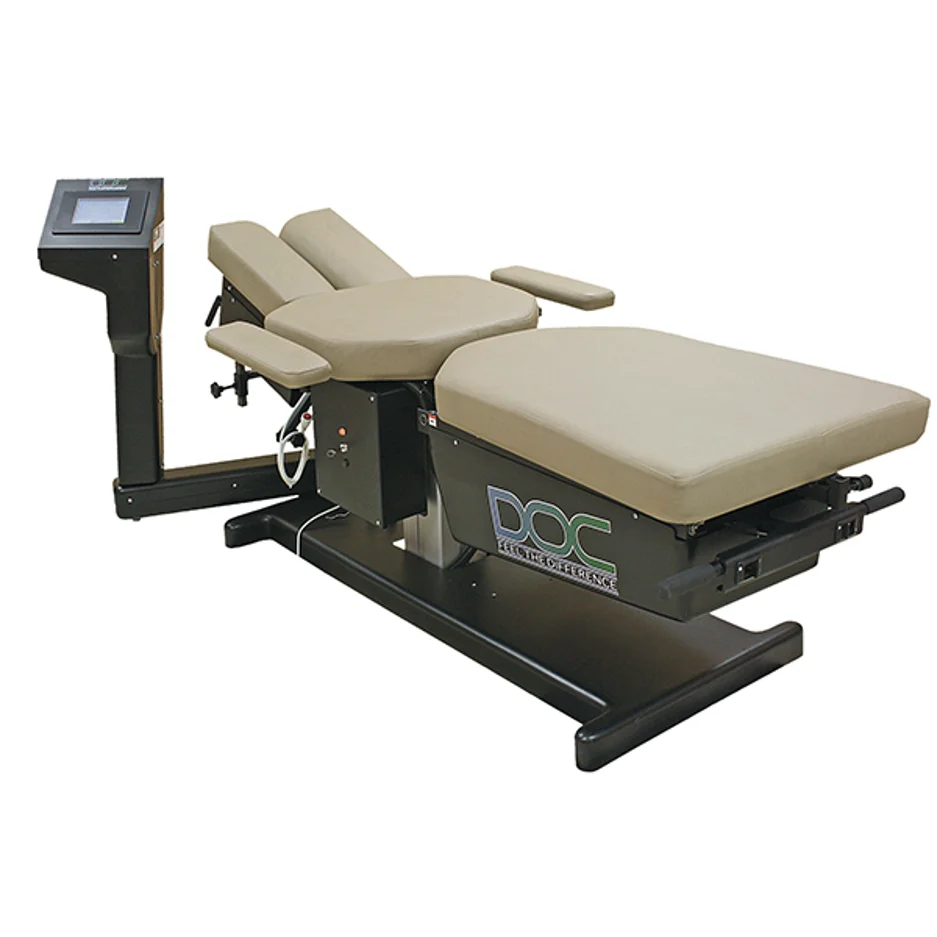
Spinal decompression uses a motorized table to gently and precisely stretch the spine. The goal is to create negative pressure inside the disc. Think of it like releasing suction. That negative pressure can help pull a bulging disc away from the nerve and encourage nutrient-rich fluid to flow back into the disc, which supports healing.
This is different from just lying on a traction table and being pulled. Modern decompression equipment is computerized and alternates between tension and relaxation in a way designed to keep the surrounding muscles from guarding and resisting. The treatment is typically painless, and many people find it surprisingly comfortable.
The intended outcomes are:
- Reduced pressure on the affected nerve root
- Less inflammation around the disc and nerve
- Improved disc hydration and function over time
- Gradual reduction in pain, numbness, and tingling
Who Tends to Benefit
Spinal decompression tends to work best for people whose sciatica is coming from a herniated, bulging, or degenerating disc. If you have had an MRI or X-ray that shows disc involvement, that is often a good sign that decompression is worth trying.
Good candidates are typically people who:
- Have radiating leg pain, numbness, or tingling from a disc-related cause
- Have not found lasting relief from rest or medication alone
- Want to avoid surgery or injections if at all possible
- Are in generally good spinal health apart from the disc problem
You can learn more about the full range of options we offer at our services page.
What to Expect During Treatment
A typical course of decompression therapy is not a one-and-done visit. Most people go through a series of sessions over several weeks, often combined with other supportive care like chiropractic adjustments, laser therapy, or specific exercises. The exact plan depends on how long the problem has been there, how severe it is, and how your body responds.
During each session, you are fitted with a harness around your pelvis and positioned on the table. The table does the work. Sessions usually last around 20 to 30 minutes. Some people notice relief fairly quickly; others see gradual improvement over the course of treatment. Either way, progress is tracked so we can adjust as needed.
When Decompression Is Not the Right Fit
Spinal decompression is not appropriate for everyone, and a thorough evaluation matters before starting. It is generally not recommended for people who:
- Have fractures, tumors, or advanced osteoporosis in the spine
- Have had spinal fusion surgery in the affected area
- Are pregnant
- Have severe instability in the spine
- Have sciatica caused by something other than disc or nerve compression (such as piriformis syndrome, which needs a different approach)
This is why a proper exam, and often imaging, is part of the process before we recommend decompression for anyone. The goal is to make sure you get the right treatment, not just a treatment.
So Does It Actually Work?
For the right candidate, yes. Research supports spinal decompression as a legitimate option for disc-related sciatica, and many patients report meaningful improvement in their pain and function. It is not magic, and it works best as part of a broader care plan. But for people who are dealing with that relentless shooting, burning pain down the leg and want a real non-surgical option, it is absolutely worth a conversation.
If you are ready to find out whether decompression might be right for your situation, reach out to our office and we can start with a thorough evaluation.