
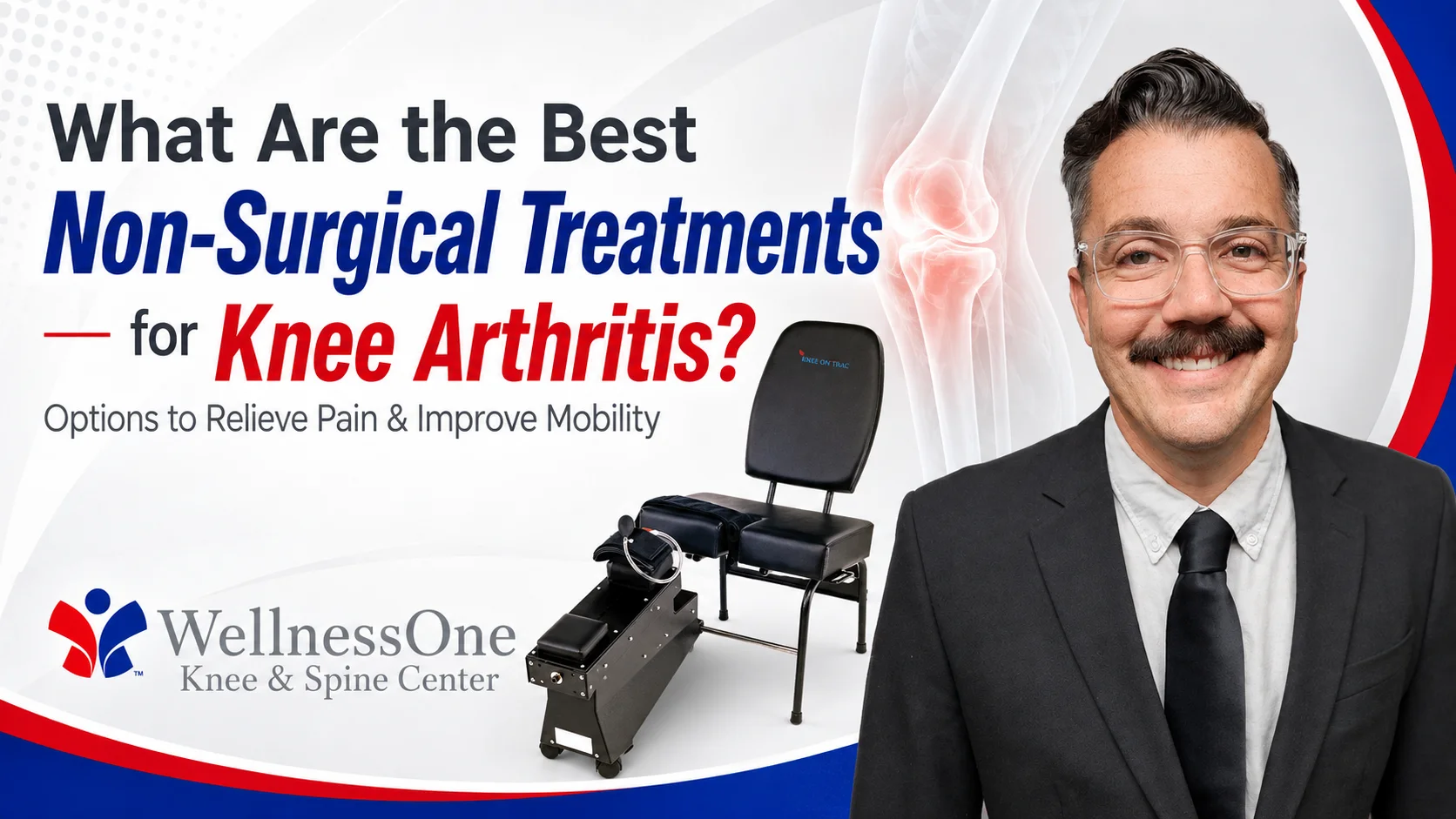
If your knees ache when you climb stairs, stiffen up after sitting for an hour, or grind and click with nearly every step, you already know how much knee arthritis can chip away at everyday life. The good news is that surgery is not the only path forward. There is a wide range of non-surgical options available, and for many people with early-to-advanced osteoarthritis, the right combination of treatments can meaningfully reduce pain and help maintain function for years.
What works best varies from person to person, so think of this as a starting point rather than a prescription. A thorough individual evaluation is always the right first step before committing to any treatment plan.
Movement and Exercise
It sounds counterintuitive when your knees hurt, but movement is one of the most effective tools available. Low-impact exercise, think swimming, cycling, walking on even ground, and gentle strength training, helps preserve the cartilage-nourishing fluid in the joint and keeps the surrounding muscles strong enough to take some load off the knee itself.
The key is finding activities that challenge you without aggravating inflammation. High-impact sports or exercises that involve deep squatting tend to cause flare-ups, especially in more advanced cases. A physical therapist or chiropractor can help design a program that fits your current level.
Weight Management
Every extra pound of body weight puts roughly four pounds of additional pressure on the knee joint during normal walking. For someone carrying even 20 extra pounds, that adds up quickly over the course of a day. Losing weight is not easy, and it is not a quick fix, but research consistently shows that meaningful weight reduction reduces knee pain and slows the progression of cartilage loss. Pairing weight management with exercise tends to produce better results than either approach alone.
Bracing
A well-fitted knee brace can offload the most damaged compartment of the joint and provide stability during activity. Unloader braces, which are designed for people with arthritis concentrated on one side of the knee, are particularly useful for some patients. Bracing is not a cure, but it can make daily activities more comfortable and reduce reliance on pain medication. The fit matters a great deal, so getting a recommendation from a clinician rather than just picking one off a shelf is worth the extra step.
Medication
Over-the-counter anti-inflammatories like ibuprofen or naproxen are commonly used to manage arthritis flare-ups. Topical options, such as diclofenac gel, can be helpful for people who want to minimize systemic side effects. Prescription medications are also available for more significant pain. That said, most medications manage symptoms rather than addressing the underlying joint changes, and long-term use of anti-inflammatories carries its own risks. This is a conversation worth having with your primary care provider.
Injections
Corticosteroid injections can provide short-term relief by reducing inflammation inside the joint. They work well for some patients but tend to offer diminishing returns with repeated use. Hyaluronic acid injections, sometimes called viscosupplementation, aim to restore some of the lubricating quality to the joint fluid. The evidence on hyaluronic acid is mixed, but some patients report noticeable improvement, particularly those with mild to moderate arthritis. Platelet-rich plasma (PRP) injections are a newer option with growing research support, though availability and insurance coverage vary.
Physical Therapy
A skilled physical therapist brings more to the table than a generic exercise sheet. Manual therapy, targeted strengthening, gait retraining, and education about joint protection strategies can all be part of a PT program. Physical therapy tends to work best when it is specific to your movement patterns and the particular demands of your daily life. Many people find it most useful early in the arthritis process, though it can also help after other treatments to maintain gains.
Laser Therapy
Low-level laser therapy (also called cold laser or photobiomodulation) uses specific wavelengths of light to reduce inflammation and support cellular repair in the tissues around the joint. It is painless, requires no recovery time, and has a reasonable body of evidence behind it for musculoskeletal pain. It is not a standalone solution for severe arthritis, but as part of a broader treatment plan it can help reduce pain and improve function. Our office offers laser therapy as part of our knee care services. You can learn more at our services page.
Knee Decompression
Knee decompression is a specialized therapy that gently creates distraction within the knee joint, relieving pressure on the cartilage and promoting circulation of joint fluid. It is particularly relevant for patients experiencing bone-on-bone discomfort or significant joint space narrowing. The treatment is non-invasive, performed with a specific device, and is typically done in a series of sessions. Not everyone is a candidate, which is why an evaluation comes first, but patients who do qualify often report improvements that other treatments had not provided.
Chiropractic Support
Chiropractic care for knee arthritis goes beyond spinal adjustments. A chiropractor with experience in extremity care can assess how your knee is moving, identify compensatory patterns in the hip, ankle, and lower back that are placing extra stress on the joint, and use manual therapy techniques to improve mobility and reduce discomfort. Chiropractic can also serve as a coordinating role, helping you make sense of all your options and build a coherent plan rather than trying treatments in isolation.
What to Keep in Mind
No single treatment is right for everyone, and the severity of your arthritis, your activity level, your overall health, and your goals all factor into what is likely to help most. Some people do very well with exercise and weight management alone. Others need a combination of therapies to get meaningful relief. The important thing is to start with a proper evaluation so that whatever you try is actually matched to your situation.
If you have been managing knee pain on your own or are looking for a clearer direction, we would be glad to talk through your options. You can reach us directly at our contact page to schedule a visit.