
Hearing the phrase "bone-on-bone" is one of those moments that tends to stick with people. It sounds final, almost mechanical, like two pieces of metal grinding against each other with nothing left in between. But the reality is a little more complicated than that, and understanding what that phrase actually means can make a real difference in the decisions you make about your knee.
What "Bone-on-Bone" Actually Describes
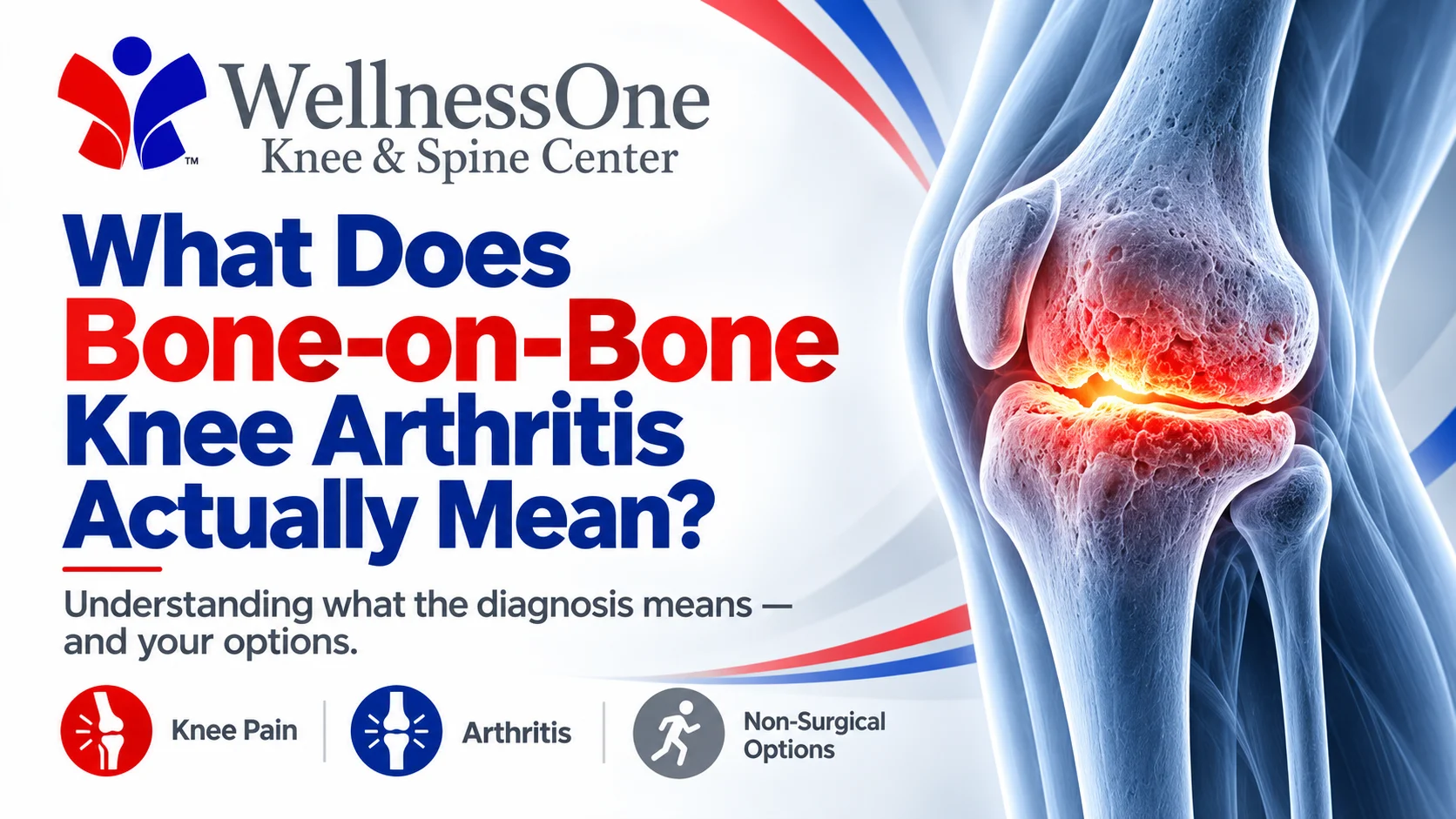
"Bone-on-bone" is not a formal medical diagnosis. It's a common way of describing what an X-ray shows when someone has advanced osteoarthritis, specifically significant loss of the joint space between the bones of the knee. That joint space is largely occupied by cartilage, a tough, slippery tissue that cushions the joint and helps it move smoothly. When cartilage wears down significantly, the gap on the X-ray narrows, and in severe cases it can look like the bones are nearly touching.
That image is real. The cartilage loss is real. But "bone-on-bone" is not a precise measurement, and it doesn't tell the whole story of what's happening in your knee or how much pain you should be in.
X-Ray Findings and Pain Don't Always Match Up
One of the more surprising things in orthopedic research is how poorly X-ray severity correlates with how much pain a person actually experiences. Some people with dramatic joint space narrowing on imaging have relatively manageable symptoms. Others with moderate findings are barely able to walk. The X-ray shows structure, but it doesn't capture inflammation levels, muscle function, nerve sensitivity, movement patterns, or any of the other factors that heavily influence knee pain.
It also doesn't mean every compartment of the knee is equally affected. The knee has three compartments, and "bone-on-bone" changes often affect one more than the others. So the phrase can be a bit of an overstatement depending on where things actually stand.
Common Symptoms of Advanced Knee Arthritis
Whatever the imaging shows, the symptoms are usually what bring people in. Advanced knee osteoarthritis commonly involves:
- Stiffness, especially in the morning or after sitting for a while
- Swelling that comes and goes, sometimes after activity
- A grinding, crunching, or clicking sensation with movement
- Pain on stairs, particularly going down
- Difficulty rising from a chair or getting up off the floor
- Reduced walking tolerance, where you used to be able to walk a mile and now half a block is a challenge
- Loss of full range of motion, a knee that won't bend or straighten completely
If any of those sound familiar, you're not alone. Knee osteoarthritis is one of the most common reasons adults over 50 seek care, and it's increasingly affecting people in their 40s as well.
Why Knee Pain Is About More Than Cartilage
Cartilage loss sets the stage, but it's rarely the only reason your knee hurts. Inflammation in the joint lining (the synovium) plays a significant role in pain and swelling. The muscles around the knee, especially the quadriceps, hamstrings, and hip muscles, have a major influence on how much pressure the joint absorbs with every step. When those muscles are weak or imbalanced, more load gets transferred directly to the joint surfaces.
Movement patterns matter too. People in pain naturally start to compensate, favoring one leg or changing their gait, and those compensations often create new problems over time. Addressing only the cartilage, or waiting until a surgeon replaces the joint, misses a lot of what's actually driving the pain and limitation.
Surgery Is Not Automatically the Next Step
Being told you're "bone-on-bone" does not mean knee replacement is inevitable right now, or that it's your only option. For many people, especially those who haven't exhausted non-surgical approaches, conservative care can meaningfully reduce pain and improve function. Depending on the patient, that might include:
- Targeted exercise and physical rehabilitation
- Weight management to reduce load on the joint
- Anti-inflammatory medications or corticosteroid injections (managed by your physician)
- Knee bracing to offload the affected compartment
- Knee decompression therapy
- Low-level laser therapy to support tissue healing and reduce inflammation
- Other supportive, non-surgical approaches
You can read more about the specific services we offer at WellnessOne's knee and spine care services page.
How WellnessOne Evaluates Knee Arthritis Patients
At WellnessOne in Lincoln, we don't just look at your X-ray and work backward from there. When someone comes in with knee pain and a history of arthritis, we do a thorough evaluation that looks at how the knee is actually moving, where the pain is coming from, how the surrounding muscles are functioning, and what the person's daily life and goals look like.
That evaluation helps us determine whether someone might be a good candidate for our knee program, and what a realistic plan looks like for them specifically. Not every patient is a good fit for every therapy, and we'd rather be honest about that upfront than overpromise.
Realistic Expectations for Non-Surgical Care
It's worth being straightforward here: non-surgical care cannot regrow severely damaged cartilage or reverse structural changes in the joint. That's not what it promises, and anyone who tells you otherwise isn't being straight with you. What it can do, for the right patient, is reduce pain, restore some range of motion, improve strength and stability, and help you function better day to day. For a lot of people, that's enough to stay active, avoid surgery for years, or go into surgery in better overall shape if it does eventually become necessary.
When Surgical Evaluation Makes Sense
There are situations where an orthopedic evaluation or surgery is the right call. If conservative care has been genuinely exhausted and quality of life is severely limited, if there's significant joint deformity affecting alignment, or if pain is simply not responding to non-surgical treatment, a consultation with an orthopedic surgeon is appropriate and worth pursuing. We will always tell patients when we think that's where they need to go.
If you're in the Lincoln area and you've been told your knees are bone-on-bone, we'd encourage you to get a full evaluation before deciding anything. Contact our office with any questions, or use the link below to schedule a knee evaluation and find out whether our program might be a fit for you.